
Community Ownership Field Guide: A Multi-City Panorama
Models of community ownership can look different from one zip code to the next. But across all of them are recurring decisions to be made around structure, capital, relationships, and support.
That’s where comparative research can help.
The Community Ownership Field Guide: A Multi-City Panorama is designed to make the knowledge practitioners are generating every day more visible and usable: identifying patterns across places and returning what we learn to the field in forms people can use.
Each case study is accompanied by an action guide, which translates our findings and frameworks into tailored strategies that practitioners, policymakers, funders, and lenders can apply in their work.
This series is grounded in the practice and leadership of the people advancing community ownership on the ground. We’re deeply grateful to the practitioners and those working alongside them who shared their time, experience, and knowledge with us
Redesigning Property Relations: The Paths to Viability in Community Ownership
A framework for understanding how community ownership organizations shift who owns real estate, who controls it, and who benefits from it. We identify three paths to viability — invention, coordination, and integration — to explain how these groups make their models viable within their unique local contexts.
Paths to Viability in Community Ownership: Action Guide
A practical companion to the case study, this action guide helps practitioners, funders, and policymakers apply the framework through interventions tailored to their current "path."
Resourcing Community Ownership: The Processes of Capital
The recurring processes through which community ownership organizations assemble capital and navigate structural barriers, turning relationships and community support into the financing they need to acquire and sustain assets. This study reveals both the ingenuity required to finance community ownership today and opportunities to build a more supportive capital system long-term.
The Processes of Capital: Action Guide
Building on the case study’s findings, this action guide outlines interventions for lenders, philanthropy, policymakers, and other field actors to reduce barriers to capital and better resource community ownership at scale.
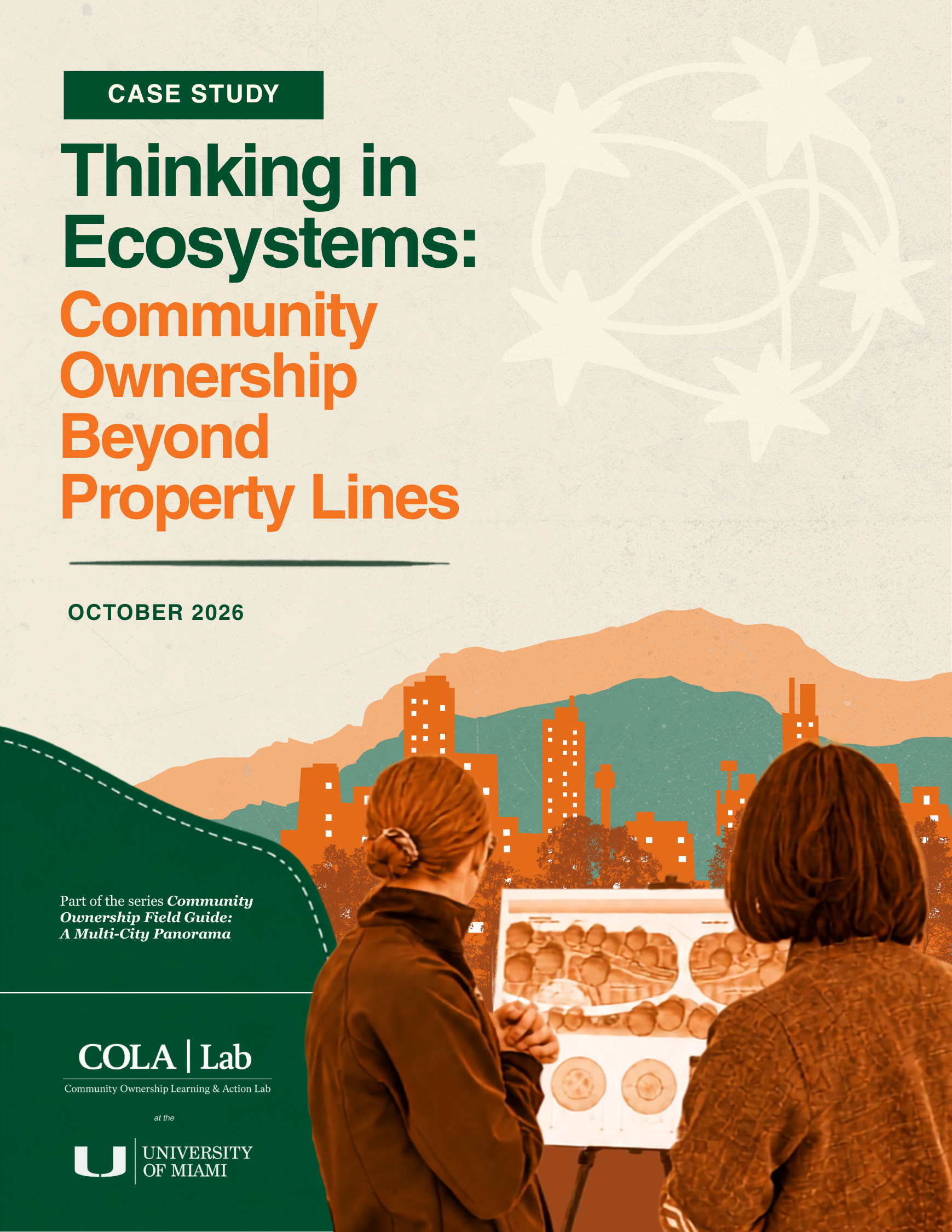
Thinking in Ecosystems: Community Ownership Beyond Property Lines
A look at the patterns through which community ownership takes shape when infrastructure is still informal, identifying the connective tissue that moves projects forward. Drawing on cases in three cities, we examine how relationships and resource coordination accumulate across projects to form the infrastructure of an emerging field.

Thinking in Ecosystems: Action Guide
This companion implementation tool offers recommendations and interventions for strengthening the relationships and support networks that community ownership projects rely on. It helps identify opportunities to strengthen existing ecosystems and build the infrastructure needed for community ownership to grow.
The Redesigning Property Relations case study features AI-generated with human-assisted design flourishes (the rivers and people on boats on page 5).